24/7 Sewage Cleanup Cape Cod, MA
40 Years Locally Owned | 2-Hour Arrival Guarantee | IICRC-Certified | Direct Insurance Billing
40 Years Locally Owned | 2-Hour Arrival Guarantee | IICRC-Certified | Direct Insurance Billing
24 Hour Emergency Assistance
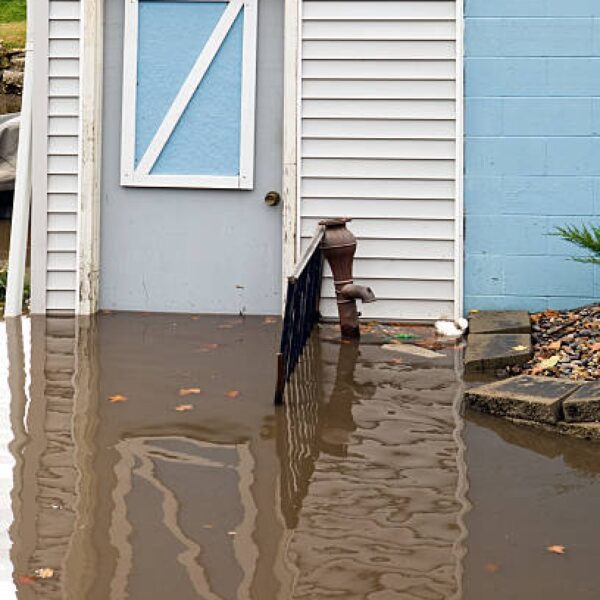
Sewage backup is one of the most hazardous emergencies a Cape Cod homeowner can face. Black water, the technical term for sewage-contaminated water, carries E. coli, hepatitis A, salmonella, and other pathogens that can contaminate everything it comes into contact with. Every minute it sits, the health risk grows, and the restoration cost climbs.
Since 1985, Disaster Specialists has responded to sewage emergencies across Barnstable County with the equipment, certification, and experience to safely and completely handle Category 3 black water. With 30+ fully equipped trucks, offices in Sandwich, Fairhaven, and Plymouth, and a 2-hour arrival guarantee on all emergency calls, we are the locally owned restoration team Cape Cod depends on when it matters most.
Cape Cod has a septic infrastructure unlike nearly any other region in Massachusetts. The vast majority of properties in Barnstable County rely on private Title 5 septic systems rather than municipal sewer connections. This means sewage emergencies here often involve more complex failures than a simple mainline clog.
Evacuate the affected area immediately. Keep family and pets out of rooms with sewage contamination.
Do not touch sewage water. Even brief skin contact with Category 3 water can transmit pathogens. Do not attempt to clean it up.
Shut off your water supply. This prevents additional flow from contributing to the backup.
Turn off HVAC systems. Contaminated air circulating through your ductwork spreads pathogens to other rooms.
Photograph everything for your insurance claim. Document all affected areas before any cleanup begins.
Call Disaster Specialists: 800-675-3622. We arrive within 2 hours, 24 hours a day, 7 days a week.
Sewage backup coverage in Massachusetts varies by policy. Standard homeowners policies do not automatically cover sewage backup; it is often available as a separate rider or endorsement labeled ‘water backup and sump overflow.’ If you do not have this endorsement, your standard policy may still cover related water damage restoration if the backup was caused by a covered event.
Disaster Specialists handles direct insurance billing and works with all major Massachusetts carriers, including Barnstable County Mutual, Amica, Arbella, Safety Insurance, Travelers, Liberty Mutual, and MetLife. We prepare detailed documentation of all contaminated materials and provide moisture mapping data to support your claim from day one.
We follow a rigorous, IICRC-certified biohazard restoration protocol designed specifically for Category 3 water events:
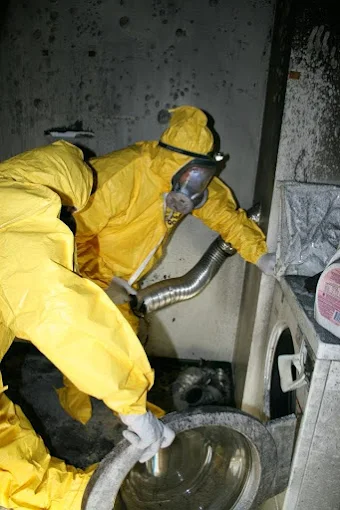
Our crew arrives within 2 hours and immediately establishes containment barriers using physical sheeting and negative air pressure machines with HEPA filtration to prevent sewage particles from spreading to unaffected areas of your home.
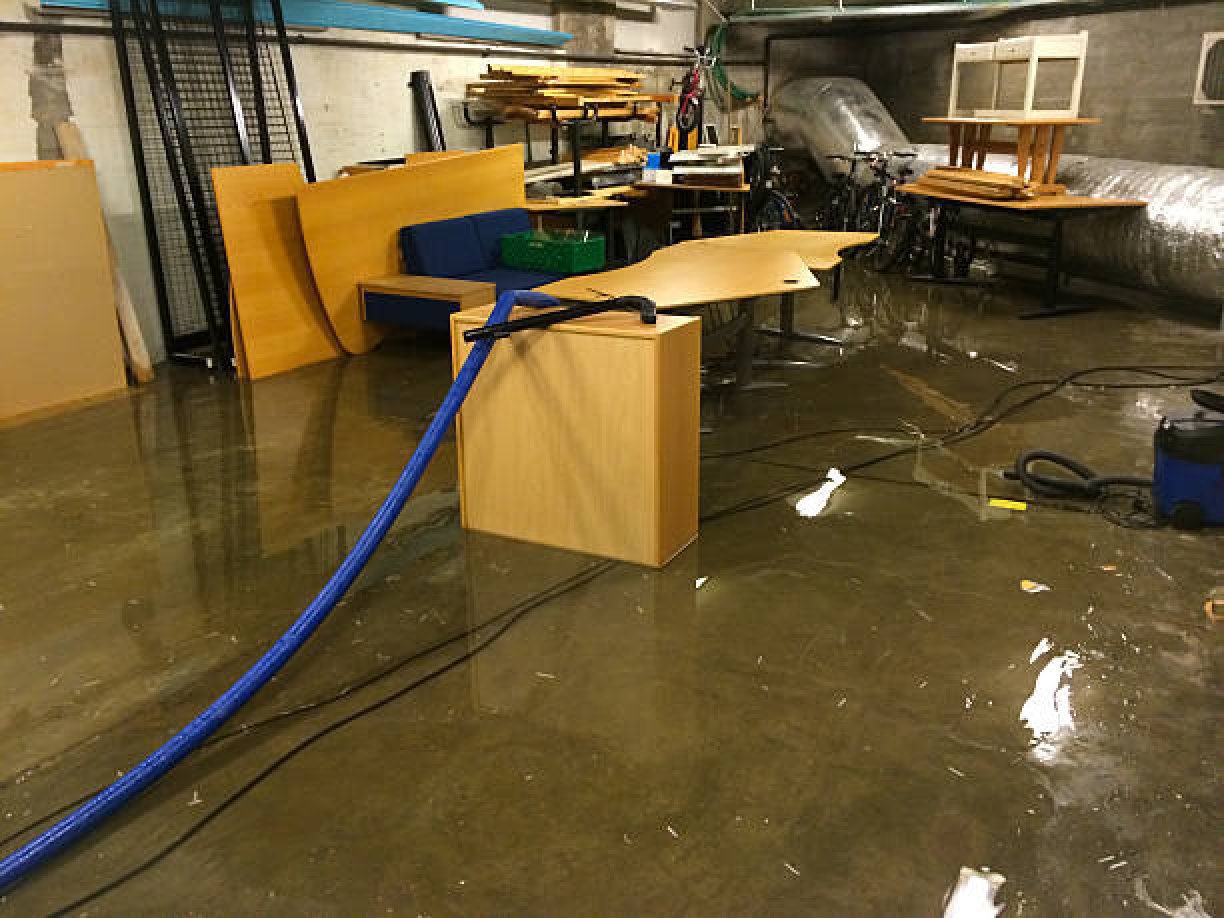
Standing sewage water is extracted using truck-mounted units designed for contaminated water. All materials that cannot be properly disinfected, including saturated drywall, insulation, carpet, and flooring underlayment, are carefully removed, bagged, and disposed of in accordance with Massachusetts biohazard waste regulations.
Every exposed surface is treated with EPA-registered hospital-grade disinfectants capable of killing sewage-borne pathogens, including E. coli, Salmonella, hepatitis A virus, and Norovirus. We do not use consumer-grade products.
After disinfection, Industrial LGR Dehumidifiers and high-speed air movers eliminate all residual moisture from structural materials. Daily moisture readings confirm we meet certified dry standards before any reconstruction begins. This step is critical to preventing mold growth in Cape Cod's already humid coastal environment.
Commercial-grade ozone treatment and activated carbon air filtration remove sewage odors at the molecular level. We do not mask odors with fragrances; we eliminate them.
Once the area is verified clean and dry, we rebuild what was removed: drywall, insulation, flooring, and trim. You deal with one team from emergency extraction through final reconstruction, with no coordination gaps between restoration and rebuilding contractors.
Sewage backup coverage in Massachusetts varies by policy. Standard homeowners policies do not automatically cover sewage backup; it is often available as a separate rider or endorsement labeled ‘water backup and sump overflow.’ If you do not have this endorsement, your standard policy may still cover related water damage restoration if the backup was caused by a covered event.
Disaster Specialists handles direct insurance billing and works with all major Massachusetts carriers, including Barnstable County Mutual, Amica, Arbella, Safety Insurance, Travelers, Liberty Mutual, and MetLife. We prepare detailed documentation of all contaminated materials and provide moisture mapping data to support your claim from day one.
We respond to sewage emergencies throughout Barnstable County and the South Coast:
Sandwich | Falmouth | Barnstable | Yarmouth | Dennis | Harwich | Brewster | Chatham | Orleans | Eastham | Wellfleet | Truro | Provincetown | Mashpee | Bourne | Plymouth | New Bedford | Fall River | Fairhaven
For guidance on Cape Cod health and environmental issues related to septic systems, visit Barnstable County health and environmental resources.
Emergency extraction and containment are typically complete within 4-8 hours for a standard residential backup. Structural drying takes 3-5 days and is verified by daily moisture readings. Reconstruction timing depends on the scope of material removal required. We provide a detailed timeline and cost estimate before work begins.
It does affect the root cause assessment and future prevention, but our cleanup process is the same regardless of whether your home uses municipal sewer or a private septic system. We document the source and extent of contamination to support your restoration claim and to assist with any septic system evaluations required by Massachusetts Title 5 regulations, as outlined by the Commonwealth of Massachusetts.
You may need to leave your home during sewage cleanup, depending on the severity of contamination and the health risks.
In most cases, we recommend temporarily vacating the affected floor or area during active extraction and disinfection due to the biohazard risk and the noise/disruption of industrial equipment. If contamination is isolated to a basement or single room, the rest of the home may be safe to occupy. Our project manager will advise you on safe access zones upon our arrival.
It does affect the root cause assessment and future prevention, but our cleanup process is the same regardless of whether your home uses municipal sewer or a private septic system. We document the source and extent of contamination to support your restoration claim and to assist with any septic system evaluations required by Massachusetts Title 5 regulations, as outlined by the Commonwealth of Massachusetts.
You may need to leave your home during sewage cleanup, depending on the severity of contamination and the health risks.
In most cases, we recommend temporarily vacating the affected floor or area during active extraction and disinfection due to the biohazard risk and the noise/disruption of industrial equipment. If contamination is isolated to a basement or single room, the rest of the home may be safe to occupy. Our project manager will advise you on safe access zones upon our arrival.